


MagiLotl: Idle Wizard Tycoon
4.425.00 Reviews
App Specs
- Version
- 1.0.6
- Updated On
- License
- Free
- Downloads
- 50,000+
- Developer
- Unimob Games
- Categories
- Simulation
- Platform
- Android
Screenshots
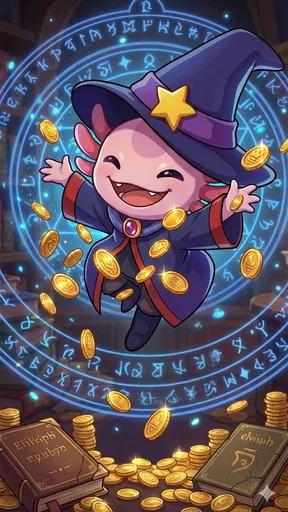
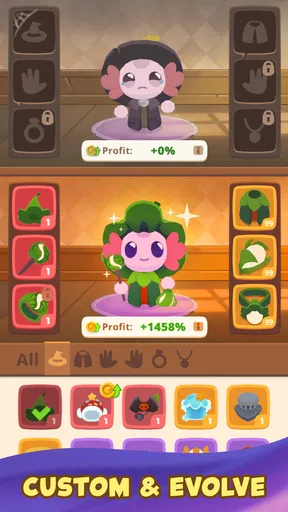
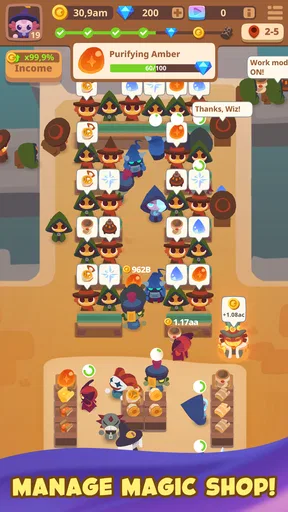
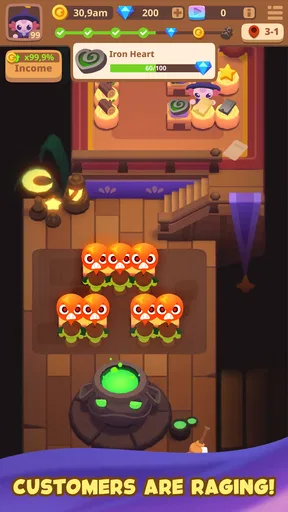



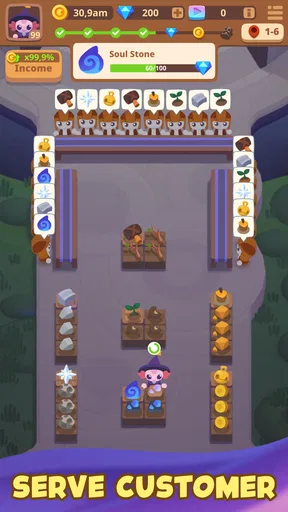
 Analysis by AppCompare
MagiLotl: Idle Wizard Tycoon caught my attention because it combines three very different hooks in one package: running a magic shop, collecting and dressing up axolotls, and competing in a PvP arena. That mix sounds busy, but the appeal is easy to understand. I can move from a relaxed management task to a cosmetic activity and then into a more competitive mode without changing games.
After spending time with it, I see a game designed around short, repeatable visits rather than one long uninterrupted session. That makes it a natural fit for checking in between other tasks, but it also raises an important question: does the charm survive once the cute characters and magical setting stop feeling new? My answer is generally positive, with some reservations about repetition, spending pressure, and how much long-term satisfaction a player wants from a light simulation game.
Why the first week feels so inviting
The strongest early feature is the contrast between the three main activities. The shop gives the game its management identity, the axolotl dressing adds a personal and playful layer, and the arena provides a reason to think about competition. If one activity starts to feel routine, the others can refresh the session.
I especially like that the axolotls are not treated as background decoration. Their cute presentation gives the game an emotional center, while the shop supplies a practical reason to keep returning. Dressing characters is usually more enjoyable when there is a larger purpose behind it, and here the visual customization sits beside an active simulation instead of replacing it.
The shop side is also approachable for players who do not normally play complex tycoon games. The basic fantasy is immediately clear: improve a magical business, keep its activity moving, and use the results to support further progress. I never felt that I needed to understand a large rulebook before making useful decisions. That accessibility is a major reason the game works during its opening sessions.
The PvP arena changes the rhythm. A shop simulator can become passive if the best strategy is simply waiting for the next reward, while a competitive mode asks for more attention. Even if a player does not become deeply invested in ranking or optimization, the arena gives the surrounding systems a sharper purpose. It creates a place where progress can feel tested rather than merely accumulated.
One useful early habit is to avoid treating every activity as equally urgent. I found the experience smoother when I used the shop as the steady foundation, then spent customization and competitive attention when I actually wanted them. Trying to push everything at once can make the game feel more demanding than it needs to be.
Worth Reading Before You Choose

Flipboard Shows What News Apps Must Do Beyond the Feed

Switching to Android Auto Means Rethinking Your Driving Routine

Google Calendar Makes a Crowded Week Easier to Manage

Ludo King Makes the Most of the Minutes Between Plans

Baby Panda World Brings Quick Play to Modern Phones, but Its Game Library Feels Busy

ESPN’s Live Game View Makes Following Close Games Easier
The free entry point helps with that experimentation. MagiLotl is free to start, and its age rating is Everyone, so it is easy to recommend as a low-risk trial for families or casual players. The game is available for devices running Android 7.0 or later, which covers a broad range of phones and tablets. The current version is 1.0.6, and the developer is Unimob Games.
Its early reception is encouraging without being overwhelming: it holds a 4.4 average from around 274 ratings, with roughly 22 written reviews and over 50 thousand installs. I would read those figures as a sign that the concept connects with an initial audience, not as proof that the game will suit every long-term player.
The small decisions that matter more than they first appear
The first non-obvious lesson is that the game is easier to enjoy when I decide what kind of session I am having before opening it. A quick check-in should focus on keeping the shop moving and collecting what is ready. A longer session is better spent on dressing choices, planning upgrades, or the arena. This simple separation prevents short visits from turning into unfinished chores.
The second lesson concerns cosmetics. It is tempting to change outfits constantly because the axolotls make experimentation fun, but I get more value from treating customization as a reward for a particular goal or mood. Saving a preferred look, when possible, gives the collection side more meaning than changing appearances without any personal connection.
The third is about competition. The arena should not be the only measure of progress. If a player judges the entire game by PvP results, the relaxed shop and collection elements may start to feel like preparation for a contest rather than enjoyable systems in their own right. I prefer seeing the arena as an optional pressure valve: useful when I want intensity, but not something that should dominate every visit.
What keeps it useful after the novelty fades
The month-to-month question is harder. Cute axolotls and a magical shop make a strong first impression, but long-term value depends on whether the routine remains pleasant. In my experience, MagiLotl has the best chance of staying installed for players who enjoy gradual progress and light daily management. It is less convincing for anyone seeking a story with a clear ending or a simulation with deep economic complexity.
The shop provides the most reliable recurring reason to return. A business-management loop naturally supports repeated visits because there is always a sense of continuation: the business can be checked, improved, and prepared for the next visit. That structure works well for someone who likes seeing a small operation become more capable over time.
Still, idle progression has an unavoidable trade-off. The less attention a game demands, the more carefully it must make each active decision feel worthwhile. If most visits become collecting, tapping through routine steps, and waiting again, the game can turn into maintenance rather than play. MagiLotl is most satisfying when I actively choose a goal instead of opening it automatically out of habit.
The collection and dress-up layer helps because it gives progress a personal face. A new outfit or a better-looking axolotl can feel rewarding even when the underlying shop improvement is incremental. This is a good example of a system that may not deepen the simulation mechanically but can improve the emotional payoff of returning.
The arena is the most likely source of recurring variety, especially for players who enjoy comparing their decisions with other people. It also creates a natural long-term split in the audience. Competitive players may find reasons to refine their approach, while relaxed players may visit only occasionally. That flexibility is valuable, although it means the game’s lasting appeal depends heavily on which side of the experience a player prefers.
Compared with a traditional tycoon game, this is lighter and more social in spirit. A conventional management simulator may offer more detailed planning, longer chains of production, or a stronger sense of building an efficient economy. MagiLotl instead spreads its appeal across management, character presentation, and competition. I would choose it when I want variety and charm; I would choose a deeper tycoon alternative when I want the business model itself to occupy my attention for hours.
Compared with a pure dress-up game, MagiLotl gives customization a more active context. The axolotls are part of a shop-and-arena experience, so the game is not only about making attractive combinations. On the other hand, players who want a large fashion-focused experience may find the management and PvP elements distracting rather than enriching.
Against a purely competitive mobile game, the pace is gentler. That is a strength for people who dislike constant pressure, but a weakness for players who want every session to deliver immediate action. The game’s identity is strongest in the middle: more interactive than a passive idle title, but less intense than a dedicated arena game.
Who is most likely to keep playing?
I would recommend it to someone who enjoys checking a game several times during the day, making small improvements, and collecting visual options without needing a heavy narrative. It also suits players who like having a competitive mode available but do not want competition to define every minute.
A realistic everyday scenario would be opening the game during a short break, collecting the shop’s progress, making one practical improvement, and changing an axolotl’s look before leaving. Later, with more time available, I might enter the arena or spend longer deciding how I want the shop and characters to develop. That pattern feels more natural here than trying to complete a long session in one sitting.
I would be more cautious about recommending it to players who dislike idle mechanics, cosmetic collecting, or repeated check-ins. It is also not the best choice for someone who wants a highly detailed business simulation, a substantial single-player campaign, or a competitive game with no softer side activities.
The maintenance cost of keeping it in a routine
The main maintenance burden is not technical complexity; it is attention. Games built around recurring shop visits can quietly become another item on a daily checklist. At first, that regularity feels rewarding. Later, it can feel like an obligation if the player believes every missed visit means falling behind.
My advice is to set a personal stopping point. Decide what a satisfying visit means before opening the game, whether that is collecting progress, improving one part of the shop, or playing a few arena matches. Without that boundary, the mixture of idle rewards and competitive goals can make a short game feel endless.
In-app purchases range from $0.99 to $99.99 per item, so spending discipline matters. The broad range does not automatically make the game unsuitable, but it does mean I would treat purchases as optional entertainment rather than a normal part of progression. A good test is to play long enough to learn whether the basic loop is enjoyable before considering any payment.
The most sensible approach is to avoid buying in response to frustration. If a shop improvement or arena result feels slow, pause and ask whether the purchase would add lasting enjoyment or merely remove a temporary wait. In a game built on gradual progress, paying to accelerate one moment may not solve the larger repetition that appears later.
For families, the Everyone rating makes the theme broadly approachable, but I would still explain the purchase model before handing the game to a child. The colorful style can make optional items feel especially tempting. Clear device-level spending controls are useful whenever a free game includes purchasable items, even when the player is mainly interested in the harmless dress-up side.
Another maintenance issue is deciding which mode deserves attention. The shop, customization, and arena can pull in different directions. If I try to optimize all three equally, the game risks becoming a series of small obligations. Choosing one primary interest for a given week keeps the experience lighter and makes progress feel more intentional.
Where fatigue can set in
The first fatigue point is repetition in the shop loop. Incremental improvements are satisfying when they change how I think about the business, but less satisfying when they simply make the next collection cycle look similar to the last. The game benefits from variety, yet the basic routine still needs to carry much of the long-term experience.
The second is the tension between relaxation and PvP. Competition can energize the game, but it can also make a previously comfortable routine feel like preparation for a test. Players who are sensitive to losing streaks may enjoy the shop and outfits more if they keep the arena as an occasional activity rather than a daily requirement.
The third is cosmetic fatigue. Axolotls are naturally charming, and that charm carries the opening hours, but visual novelty has limits. If customization is the main reason someone returns, the player needs to enjoy arranging and revisiting looks, not just unlocking them. Otherwise, the dress-up layer may lose its power before the shop does.
There is also a broader issue with hybrid design: every added mode creates another expectation. A player may wonder whether they are neglecting the shop by dressing characters, or neglecting customization by entering the arena. I found the game more enjoyable when I stopped looking for a single perfect progression path and accepted that different sessions can have different purposes.
That flexibility is also the game’s defense against burnout. I can use it as a quiet simulator one day and a more active competitive game the next. The experience becomes tiring when I demand maximum progress from every system simultaneously.
My long-term verdict on MagiLotl
MagiLotl earns lasting space on my device when I treat it as a compact, recurring hobby rather than a complete replacement for a deeper simulator. Its strongest qualities are the friendly axolotl presentation, the approachable shop loop, and the useful change of pace provided by the PvP arena. Those parts complement one another well enough to make the first week genuinely enjoyable.
Its long-term value is more conditional. Players who like gradual progress, light collection, and short sessions may continue finding reasons to return. Players who need constant mechanical discovery or a firm sense of completion may feel the routine flatten out. The game does not need to satisfy both groups, but knowing which player you are will make the decision much easier.
I also appreciate that the free starting point lets the game prove its appeal before money becomes part of the conversation. I would keep purchases separate from the question of whether the core routine is fun. If the shop, axolotls, and arena already make you want to return, optional spending can remain a personal choice. If the loop feels repetitive without acceleration, paying more is unlikely to change your opinion for long.
For me, the best way to play is with modest expectations and a clear rhythm: check the shop when convenient, use customization for personal expression, and enter the arena only when I actually want competition. That approach preserves the game’s charm and limits the maintenance burden.
My final recommendation is to try it if you want a gentle simulation with cute characters and a competitive side, but skip it if you are looking for a deep tycoon, a story-driven adventure, or a purely skill-focused arena game. The novelty does fade, as it does with most collection-focused mobile games, yet the combination of shop management and axolotl personality gives MagiLotl enough recurring value to remain worthwhile for the right kind of player.
Pros
- Relaxing idle progression with rewards earned while you are offline.
- Simple controls make it easy to play with one hand.
- Cute magical creatures give the game a charming visual style.
- Frequent upgrades create a satisfying sense of steady growth.
- Short play sessions fit well into busy schedules.
Cons
- Progress can feel slow without watching ads or spending resources.
- Gameplay may become repetitive after the initial discovery period.
- Some upgrades require considerable waiting between collection cycles.
- The small interface can make certain menus harder to navigate.
- An internet connection may be needed for ads and reward features.
FAQs for MagiLotl: Idle Wizard Tycoon
What is MagiLotl: Idle Wizard Tycoon?
MagiLotl: Idle Wizard Tycoon is an idle management game that combines magical progression with tycoon-style building. You develop a wizard-themed operation, collect resources, unlock upgrades, and expand your facilities while your production continues even when you are not actively playing. It is designed for players who enjoy gradual progress, automated systems, and light fantasy gameplay rather than fast-paced combat.
How does the idle progression system work in MagiLotl: Idle Wizard Tycoon?
The game allows your magical business and resource production to continue over time, including while you are away from the app. When you return, you can collect accumulated rewards and invest them in improvements, new features, or more efficient production. Active play is still useful because checking in regularly, choosing upgrades carefully, and completing available objectives can help you progress faster than relying only on offline earnings.
Is MagiLotl: Idle Wizard Tycoon free to download and play?
MagiLotl: Idle Wizard Tycoon can generally be downloaded and played without an upfront purchase, although the exact availability may depend on your Android or iOS region. As with many idle games, optional in-app purchases or rewarded advertisements may be offered to speed up progress, obtain bonuses, or reduce waiting times. You should review the store listing and your device’s purchase settings before downloading.
Does MagiLotl: Idle Wizard Tycoon require an internet connection?
An internet connection may be needed for certain functions, such as downloading game data, synchronizing progress, displaying advertisements, processing purchases, or accessing time-limited events. Basic progression may work during some offline periods, but the experience can vary depending on the version and device. For the most reliable results, open the game online occasionally so rewards and progress can synchronize correctly.
Is MagiLotl: Idle Wizard Tycoon suitable for casual players?
Yes, the game is mainly suited to casual players who enjoy short sessions, incremental upgrades, and watching a magical operation grow over time. You do not need to remain in the app constantly, since idle mechanics provide progress between visits. However, players looking for deep real-time strategy, complex controls, or highly competitive action may find the gameplay more relaxed and repetitive than traditional wizard-themed games.


